



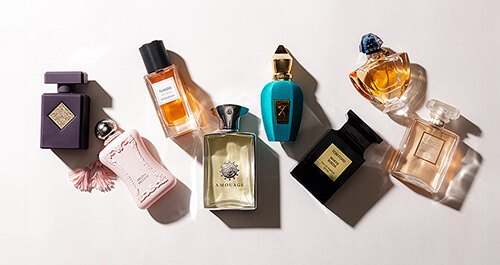
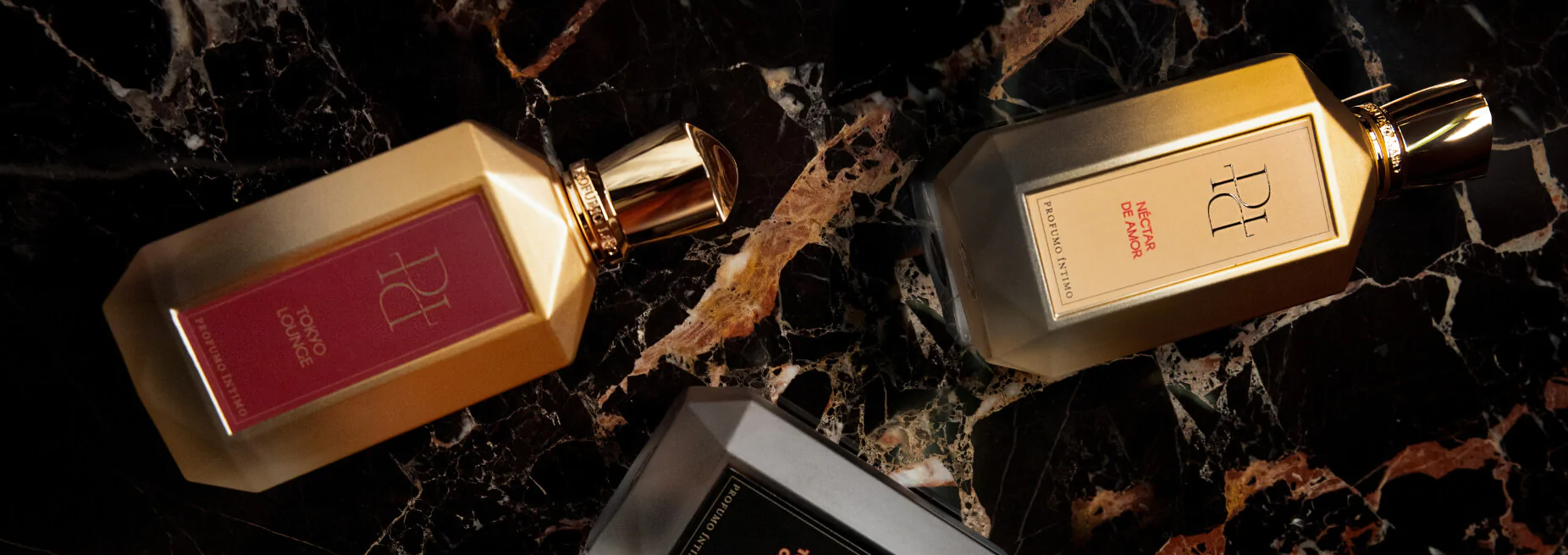
In the world of fragrances, there is a deeply rooted belief that true luxury, craftsmanship and sophistication are the domain of top-of-the-range perfumes. But is a high price tag a real guarantee of unrivalled quality? Are cheaper perfumes doomed to be mere pale imitations of their expensive counterparts? It's time to debunk this myth and show that luxury quality does not depend on price, but on passion, knowledge and an honest approach to the customer.
The price of luxury – are you paying for the fragrance or the brand?
Before we move on to the world of perfumes, let's pause for a moment to consider fashion. Why does a cotton T-shirt with the Balmain, Gucci or Dior logo cost £300, while a T-shirt with the same composition (100% cotton) from a popular chain store costs around £10? Do luxury designers import cotton from Venus, hand-picked by space angels?
The answer is simple: no. We pay for the prestige of the brand, for the huge marketing costs, for the boutique in the most expensive location and, above all, for the huge mark-up that is part of the definition of luxury.
Exactly the same mechanism governs the world of perfumes, especially niche ones. The cost of the liquid itself – the fragrance essence – is often a small fraction of the final price. The rest is a fee for the history, the brand and the feeling of belonging to an exclusive world.
Two paths in the world of alternative fragrances.
When we talk about lower-priced perfumes, it is crucial to distinguish between two completely different approaches to creating a fragrance:
1. Inspirations, or the "vibe" of the original.
This is a category that many people associate with "cheap substitutes". These are perfumes that try to capture the overall mood and the most characteristic notes of a popular fragrance. They often simplify the composition, focusing on its "skeleton". They smell good and are very affordable, but in direct comparison with the original, they may differ in details, depth or evolution on the skin. This is a good solution for someone who simply wants to "smell similar".
2. Faithful reproduction – quality without compromise.
This is a completely different philosophy. The goal is not to create "something similar," but to faithfully reproduce the original in every detail. We are talking about perfumes whose quality, durability, projection and complexity of composition are the same or very similar to expensive, niche originals. How is this possible?
The secret lies in abandoning what artificially inflates the price of luxury brands.
How can niche quality be achieved without a niche price?
Creating a fragrance that smells luxurious and is fully comparable to expensive compositions is possible if the manufacturer focuses on the essence rather than the packaging. This requires three key elements:
-
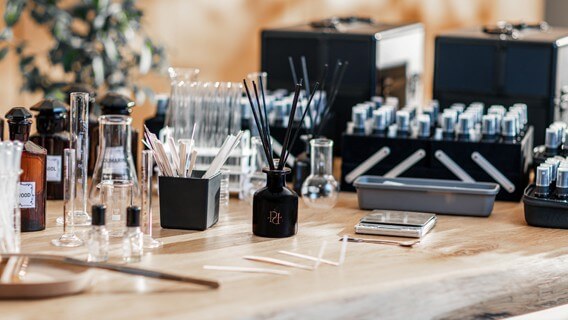
Know-how and passion: Perfumery is both an art and a science. Access to advanced technologies (such as gas chromatography) allows for precise analysis of the original ingredients and their reproduction with the highest fidelity. However, this requires extensive knowledge and a genuine passion for creating fragrances.
-
Production facilities: Access to high-quality ingredients, both natural and synthetic, is much easier today. A company that has its own facilities can control quality at every stage without relying on expensive subcontractors.
-
No inflated margins: This is the most important factor. A manufacturer that does not spend millions on advertising campaigns with Hollywood stars, does not build boutiques with gold door handles and consciously refrains from imposing huge margins can offer a product with the same olfactory value at a much lower price.
Yes, cheap perfumes can smell just as luxurious. They can have the same depth and durability and develop on the skin in an identical, multidimensional way. The condition is that you pay for the perfumer's mastery and the quality of the ingredients, not for a marketing illusion.
Luxury is quality, not price.
Ultimately, true luxury in the world of fragrances is not hidden in the price, but in the sensations that perfumes offer. It is the harmony of notes, the longevity that accompanies us throughout the day, and the compliments from those around us that confirm that our choice was the right one.
The next time you are faced with choosing a fragrance, look at it through the prism of how it differs from luxury fashion. A branded T-shirt builds its position on a visible logo; it is a trademark that we pay for. A fragrance, however, is luxury in its purest, invisible form. Floating in the air, it carries no label. It is a pure sensation that either delights with its quality or does not. That is why, in the world of perfumes, price is no longer the only determining factor. What counts is what is invisible to the eye: the mastery of composition and parameters such as durability and projection. True luxury does not need a label – it just needs to delight, and this can also be achieved by brands that put their passion above profit margins.
See also: How to check if a perfume is genuine?